Interviews From our Journals (VOL 2)
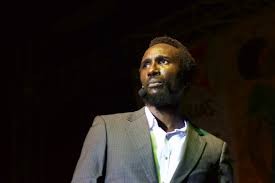
An online Conversation With Dike Chukwumerije, A Writer, Poet, Performer, and Cultural Activist. Dike Chukwumerije is an award-winning author and performance poet, best known for his poetry collections The Revolution Has No Tribe and On My Way to Azure Shores, as well as the novel Urichindere, which won the 2013 ANA Prize for Prose Fiction. He is the founder of Night of the Spoken Word (NSW) and CEO of Simply Poetry Ltd.
Opuluiche Crew: You’ve been a powerful voice in performance poetry and dramatization in Nigeria. What first drew you to spoken word and performance as your medium of expression?
Dike: I stumbled upon it by chance. I began my writing career as a page poet who, when invited to share his poetry, would read it normally from a piece of paper. Till, one day, in 2007, I was invited to an event where I observed a few of the artists before me on stage reciting their poems from memory. I saw that it was a much more effective way of communicating poetry to a live audience, since the poet is free to maintain eye contact and engage fully with those who are listening. So, I decided to add performance to my repertoire.
Opuluiche Crew: How has your journey as an artist evolved over the years, and what role has Nigeria’s social reality played in shaping your artistic voice?
Opuluiche Crew: What do you think is the role of spoken word, drama, and literature in addressing the issues of insecurity and corruption in Nigeria?
Dike: Artists are not directly responsible for solving the problems of insecurity and corruption. That’s the job of public officials. But public officials will not tackle these problems routinely and sincerely without pressure from a discerning public. So the higher the consciousness of society in general, the more likely government officials are to work hard at their jobs. Art is a very effective way of raising public consciousness. It is a responsibility artists need to take seriously.
Opuluiche Crew : Nigeria seems to be in a continuous state of political and moral decline, yet there is a troubling acceptance of this reality. How can art challenge that complacency?
Dike: Complacency is when people have gotten so used to something it no longer evokes an emotional response from them. It is the outcome of overfamiliarity with the subject. Ultimately, every work of art aims to do either one of two things – to make the strange familiar, or to make the familiar strange. Making the strange familiar is about creating empathy. And making the familiar strange is about breaking complacency, so that people can see again, with new eyes, what they had gotten used to seeing. We break complacency by introducing fresh metaphors, and associations, that allow people to experience an old topic as if it was new. This is how art challenges complacency.
Opuluiche Crew: In what ways can Nigerian artists reawaken a national consciousness that actively resists corruption and demands accountability?
Dike: A nation is fiction. It is a story. It is an evocative narrative that provides a people with a sense of origin, values, uniqueness, pride, and purpose. Pride is a particularly potent emotion in crafting national consciousness. It is pride in who you are that leads to dignity, that deep-seated feeling of being ‘above’ certain things, that is, that certain types of behaviour are ‘beneath’ you. That is why there are people who, no matter how poor or hungry they become, will never steal. Because of a pride in who they are. Ị ma kwa onye ị bụ? An artist, by telling stories that evoke this sort of pride, raises consciousness. And instils the dignity required to consider things like corruption, cowardice, and duplicity as ‘beneath’ one.
Opuluiche Crew: Do you believe art can function as a form of protest or revolution? How have you used your work to challenge systems or raise uncomfortable questions?
Dike: Art is inherently revolutionary because it deals with human imagination. At every point as artists we are challenging people to see society, not as it is, but as it could be. This is the most effective type of protest, because changing the external without changing the internal will not result in sustainable change. For change to be locked in, the mind and thinking must change. So, in my art, I focus on challenging thought systems. To me these are the real ‘strongholds’, not people, or ethnic and religious groups. The way we think about ourselves, our history, our interactions with, and perceptions of, each other – is the problem. So, my poems like ‘The Wall and the Bridge’ challenge thinking on ethnic discrimination, by asking why is Racism bad but Tribalism good? My Poem ‘I Did Not Kill The Sardauna’ challenges thinking on the historically traumatic events of 1966 – the 2 coups and pogrom – by asking us to re-think the stigmatization of entire groups for the actions of a few. My poem ‘The Revolution Has No Tribe’ challenges thinking on difference and division, by saying. ‘Do not say, ‘I am the Iroko’ when the forest is burning.’ To solve our most pressing socio-political problems we must work together across ethnic and religious lines.
Opuluiche Crew: Religion plays a strong role in Nigerian society, but it sometimes suppresses artistic freedom and resists conversations around liberal values. Have you encountered this tension in your work?
Dike: Yes. Nigeria is dominated by two monotheistic faiths – Christianity and Islam. And monotheistic faiths, by nature, tend to resistant to the any ideas that are deemed inconsistent with canon and scripture, as currently interpreted by mainstream clergy. These tensions become apparent when you start writing on topics like divorce, gender based violence, gender equality, inter-religious coexistence, the use of violence in defence of faith, and the application of reason – not blind faith – to the solving of material problems. These are topics I have had cause to write about in the past. So, yes, I have encountered this tension in my work.
Opuluiche Crew: How do you think artists can respond to the pressure to “stay silent” on issues like gender, identity, equity, and expression—especially when these are considered taboo by religious or cultural forces?
Dike: Being a socially conscious artist requires courage. You will have to endure social censure and cancellation sometimes. In some cases, you will suffer economic consequences, in jobs and contracts that may be denied you because of your views, or being stagnated in one level at your workplace because of your stance. In a few cases, you may also be threatened with incarceration and death. The Good Book says to always count the cost of what you want to do before you start building. Once you are ready to accept the consequences of your actions, then you are good to go. On the pragmatic side, the socially conscious artist must strive to have a very healthy support system (friends, family and allies), and also to diversify his or her source of income. These practical steps will help in dealing with some of the pressures that he or she will inevitably encounter along their path. It also helps to have a strong sense of purpose, rooted – ideally – in a deep faith in God.
Opuluiche Crew: What, to you, is the connection between art and truly living?
Dike: If you are an artist from deep within you, then you cannot truly live without practicing your art. For me, to truly live is to do that which you were born to do. Anything else, to me, is failure.
Opuluiche Crew: Can you speak on a moment where art, either your own or someone else’s, made you feel profoundly human?
Dike: I have many works of art that reconnect me daily with my humanity. An example is the song ‘Colors of the Wind’ that featured in the Disney cartoon, ‘Pocahontas’. The words – ‘You think the only people who are people are the people who look at things like you. But if you walk the footsteps of a stranger, you’ll learn things you never knew you never knew.’ Those words have inspired me since I was a teenager, and continue to do so. They remind me of the need to remain curious and empathetic.
Opuluiche Crew: As a father and an artist, how do you see the role of parenting in shaping the minds and values of the next generation?
Dike: There is no job in the world that is more important than Parenting. No money you make, no success or fame you achieve, will compensate for the heartache a badly brought up child will cause you in the future. Your children – both biological and non-biological – are your real legacy. Not buildings and businesses. So, NEVER compromise on parenting. Make out time to do it properly. Otherwise everything else you do is in vain. For how can the world change for the better when our children are turning out for the worse?
Opuluiche Crew: What kind of Nigeria would you like your children to inherit, and what must we begin to do—urgently—to bring that to life?
Dike: A Nigeria where young people routinely get jobs that pay a living wage within 6 months of graduation. A Nigeria where they will not have to spend more than 50% of their monthly wage on things like food, transportation, and utilities; where the Nigerian passport can give them access to most countries of the world without having to go through the indignity of excessively invasive visa interviews. A Nigeria where within 3 years of getting a job, a young person can buy a car, buy a house with an affordable mortgage, and – if they choose to – settle down to raise their family, knowing that the prices of things in the market when they are raising those children will not be very different from what they were when their own parents were raising them.
But there is no benefit without sacrifice, no progress without pain. To realize this vision of Nigeria, we must pay the price today in struggling to raise the consciousness of our people. For people to realize that as long as we keep voting along the lines of ethnicity and religion, instead of competence and results, we will continue to sink into ruin and disrepair. The advocacy against politically-motivated tribalism and religious bigotry is the most critical advocacy we must carry out today.
Opuluiche Crew: What advice would you give to young Nigerian poets and dramatists who are trying to find their voice in a country that often devalues art?
Dike: Firstly, have other sources of income. Do not look to depend solely on your art at the start of your career. It will lead to frustration and artistic compromise. Secondly, be disciplined. To be successful as an artist in Nigeria, you will have to be good at multi-tasking. You will have a job or business that pays your bills, and then you will also practice your art. This requires a lot of personal discipline. Thirdly, develop or join a support system. Link up with other creatives and artist. Encourage each other. Collaborate with each other. Celebrate each other. Support each other. Create your own personal ecosystem that keeps you burning. Fourthly, explore the world of international and (where they exist) local grants and fellowships. There is a lot resources out there in the world for artists and creatives. Don’t limit your thinking. Use the internet well to find and link up with these resources wherever they are.
Opuluiche Crew: What does your creative process look like—how do you write, rehearse, or conceptualize your performances?
Dike: Sometimes, I create intuitively. No process or system, I just start writing and see where it takes me. Sometimes, I create intentionally. I start with a plan and then I execute it methodically. Over time, I have become resilient as a creative. As our people say – since the hunter has learned to shoot without missing, the bird must learn to fly without perching. So, I have adapted to my environment, Nigeria, which is very difficult and tough. For this reason, I can write during the day, or during the night. I can write in a quiet place or in a noisy place. I can rehearse while driving, or walking down the road. I can create between meetings, in a place, or on the back of an okada. Anyhow I find the environment, I carve out space for myself and create. No excuses.
Opuluiche Crew: Finally, what is the one message you try to leave behind in every piece you create?
Conclusion
Born and raised in Nigeria, Chukwumerije uses poetry as a tool for nation-building. His work addresses themes like unity, social justice, and cultural identity. His performance poem “The Wall and The Bridge” was featured at TEDx Maitama and the Nigerian Economic Summit in 2017. His touring poetry theatre show Made in Nigeria has inspired audiences across the country.
For his art and activism, Chukwumerije has been featured at the Lagos Book and Art Festival, Ake Arts and Book Festival, and Abuja Literary Society. Through his center in Abuja, he mentors young voices and promotes civic education rooted in Nigerian values and storytelling.
Interviews From our Journals (Vol 2)
A Midday Conversation with Jerry Chiemeke, A Writer, Poet, Film Critic And A Short Story Writer.
Jerry Chiemeke is an award-winning author and also the author of the short story collection, Dreaming of Ways to Understand You (2020) and The Poetry Chapbook Notes for Nnedimma (2019).

Opuluiche Crew: Can you say a bit about your background, growing up in Nigeria, what your earliest encounter with literature were and how they shaped you?
Opuluiche Crew: In your story, in your process of you becoming a person who reads novel to a person who writes stories, novels, poems, all kinds of literature, at what point did you realize that things have changed for me, it’s no longer really about me reading and me writing. So what would you say in your life inspired or was an inspiration and at what point did you know that “I am” a writer, writing is what I want to do, writing, filmmaking, literature is what I want to do?
Chiemeke: So I think in a way I picked up writing as an hobby. I’m a freak art student as a matter of fact and grew from some sorrows called the Light Hearted Sibling Library and I will explain. So in 1998, I was seven years old and my elder brother had written a play for his school which was performed on the stage and I on the other hand had gone to see Father Christmas and embarrassed myself being live on state TV or should I say Delta State TV filmed me and I froze on the stage and they laughed at me through out that Christmas to the point I felt I was crying. I wanted to prove that I could do what my brother was praised for and I wanted my mother seeing me, in the sense that I was doing something like that. So obviously with reading a lot of literature by the past years prior and watching a lot of films, I was blessed with a pretty active imagination. So I started scribbling some stories in notebooks, whether or not they make sense it wasn’t my concern, all I care about at that time was expression. Even though the books they gave me was lost, I got another one and try to finish them. Some I thought have being stolen but I found out that they weren’t missing, that my father was keeping them for me till I grew older and had a better sense of creativity, so I could turn them into something meaningful.
Opuluiche Crew: Beautiful.
Chiemeke: So yeah, I started scribbling what I felt was a novel, novella or play in notebooks. When I got into secondary school, my interest started to dwindle and I started having interest in things like play station and football, among other things. But then getting to the university, I started to pick up that interest again. On Facebook I would find myself writing long sketches or long post that were stories themselves. And then sometime around 2013, I was in Law school, I experienced a very serious breakup and just as you know I then channeled my head into something to pour the things I experienced out. So I open a press blog and I started writing stories at a much higher level obviously with a better command of language, better grasp of diction, yeah.
Opuluiche Crew: Okay, thank you. Going through your works, I think your major work is “Dreaming of Ways to Understand You”, am I right?
Chiemeke: Yes. I mean it’s my first full work of fiction, and it’s also my first book that is imprint. I have published two books before that book, they were hybrid collection and my Poetry book are in digital format. So, “Dreaming of Ways to Understand You” is the first major one that really brought insight of push, promo and it’s the first one that was imprint.
Opuluiche Crew: Okay, So the title of your work. Dreaming of Ways to Understand You. I have always pondered what stimulated that? What brought about the title, Dreaming of Ways to Understand You?
Chiemeke: So I think, it was sort of a play on words. When I was, I think 21, I had a friend, we were closed and we like each other but we would argue a lot cause she gets mood swings and always sleeping younger, impatient and just couldn’t make sense. I think one day, we were having one our back and forth conversation and I just write down. “I dream of ways to understand how you think sometimes”. You know when I want to be clever and somehow it just got stuck and I started compiling stories together. And sometime in 2015, so it took only about five years to put the book in piece.
Opuluiche Crew: Wow five years?
Chiemeke: Yeah, sometimes you write one story, then go back to it instead of writing, you want to rework the first and second draft and then there’s a particular point where I couldn’t write at all, I wasn’t inspired, I wasn’t finding the words, sentences and I have to drop the manuscript for almost a year and. I wrote about twenty to twenty two stories lying around but I had to then select what I felt was the strongest and reduced them to fifteen. Then that way, it’s not too long or too short and not to allow people loose their attention, and in fixing the stories together, I then had to be mindful of the themes I was trying to address. So in titling works , sometimes, one thing you have to consider is what is the ranking theme, are you taking about Nigeria, are you trying to capture the disillusionment of the democratic and obviously which target audience are you speaking to. For me, I think one I’ve been lucky with is titling story and for me titling the story may not be as important as writing the full story itself but it has it own place. It’s just like a headline, your story might be very strong but if you don’t have a very catchy headline or title people might overlook it. When I decided to, …., make decision on which fifteen story I’m going to go with,. And also in the order which they would appear in the manuscript, I then have to arrange it. It’s just like a music album for example, do you listen to only gospel music or circular music?
Opuluiche Crew: I listen to all kinds of music.
Chiemeke: Okay. So let’s say a song like….. What’s your best artist?
Opuluiche Crew: I wouldn’t say I have a best artist. Let’s say use a Nigerian artist like Chike.
Chiemeke: Okay. For example, Chike’s first album was a …… Bullet that was released last year was talking about love songs, people who were served breakfast, that kind of thing. So, titling a book is just like titling an album. One of the stories in the collection had that title because the story was based on a lawyer who………
Opuluiche Crew: His girlfriend is an accountant.
Chiemeke: Yes. He had an accountant but she was stressing him out, always has a high amount of needs. So he always have difficulty in trying to know what she wants because she can change her mind in a second. By the way,. That’s actually a true story. I drew that out of my personal experience, that particular story, except the ending of course. I actually knew an accountant. But I hope she never see the book if she doesn’t care about literature. Anyways, in titling a book, you have to just come up with what makes sense and arranging the stories. It’s also important to know which would be first and which would be last. I know people have questions about that first story and there’s a reason why I started with that one.
Opuluiche Crew: No problem. Thank you for that. Going on to my next question: I read your book and there seems to be a general motif, something like a sort of defiance against conformity, should I say, societal stereotypes, the pressure to perform, pressure to become, pressure to belong, to be what we’re not. What do you think? Was there a sort of attempt to pass along a message of defiance against societal stereotypes, the desire to achieve success that takes the life out of the living. I see you protesting against forced marriages, what is your definition of success as a person as an artist and how do you project that in your work? I don’t know if you understand my question?
Chiemeke: Let me answer the first question. You know there’s a part where you talked about issue of defiance and a part where you talked about success, so I will try and answer them one by one. First I would say that, if you check the dedication section of the book, it is dedicated to the outsiders, “you won’t be unheard for long”.
Opuluiche Crew: Exactly
Chiemeke: I think for me, I was setting out to tell the stories of people whose stories maybe unheard, whose lives may not have been screened, just making them see there are a lot of no but also telling the world that they exist. And, I mean, from my own personal experience, I was not exactly the coolest kid in school. In my secondary school I was a nerd, I just knew book, I wasn’t the most popular person or the most funniest, or the most sports inclined person. I remember back in university, it was the same thing, it was class, church, and maybe a few other things in my hostel. You find out that people are mocked or bullied for being different, you find that there are people who are socially awkward and fear they couldn’t fit in the real society. Someone goes to an event and will develop social anxiety and all that to their understanding. Or, you find a young man who is not muscular, whose mannerisms or demure doesn’t suit the definition of what masculinity is. Yeah, I mean at the time I was writing these stories, no matter how the world seems to be progressive, how social media looks progressive, the truth is these people are still in the minority. So who tells their stories or who makes them feel seen, do they feel themselves. There were one of my stories in my book towards the case of abuse in the secondary school. I remember someone reached out to me saying that they went to missionary school and something similar and they had to deal with trauma for the longest time they could imagine. So in that instance, that story spoke to them and they feel less of an outcast and sorrowful. So I was just really trying to capture what it feels to we living in Nigeria and also a Nigerian that leaves the kind of life that people may not always identify with. I think for me I am lucky, to a large extent my book have been well received critically and promotionally. I wasn’t even looking for promotional sales, I just wanted someone to review it. In the last four to five years, I think most of the reviews have been posted. I think for me, success doesn’t necessarily mean you selling five thousand copies, selling ten thousand copies, I mean that’s the metric, it’s a primary metric, but I think what’s more important is if your work can speak to someone, if it can change someone life, if it can make them pick a pen and write. I think one of the reviews I saw, a Ph. D student based London saw my book and she was like wow, the stories are very life changing and in that moment that was success for me. Or someone who decides to make a film because he was inspired by one of the stories in my work or maybe someone who felt suicidal and because of what they read they felt less suicidal and has resolution. For me that’s the best where your work can speak to ten people, twenty people. If people represented, if they feel their voice was heard, yeah I think speaking to diverse demographic.
Opuluiche Crew: Okay, I think I understand what you're saying. So for you success is not really financially based, it is financially based but it's not totally.
Chiemeke: It would be nice to sell two thousand copies of books, I’m not going to pretend and say that I don’t want to sell, of course I want to sell. Like I said, I would be lucky to have this. Okay, nearly five years later,. people are still asking where they can buy my books. So, financial success is very much welcome, but like what I said in the long term it’s not just about the book, it where people can still talk about what that paragraph, what that sentence did for them after how many years. Like we still talk about “Purple Hibiscus” and “Half of a Yellow Sun” twenty years later.
Opuluiche Crew: Okay. So that question brings me to this question ---- If we are discussing this, we shall talk about the sustainability of art, how artist makes their source of income from art. That is a very important problem for artist in Nigeria especially, artist everywhere. In third world countries like Nigeria where artist........
Chiemeke: I’m not going to lie, it’s because nobody wants to be that very talented but hungry writer, nobody wants to be that man or that woman who has great ideas but can’t pay their rent, and more importantly, you want to be able to live well, .if you commune with the Bible you will come across gifts and way. You don’t want to be that kind of person that is just known for being intelligent and meanwhile nobody is coming to meet you. I think a lot of it is putting yourself out there. I started by writing on Facebook and blogs and then published for free. I started by writing on paid columns and then one day someone saw my work I think 2017 and I started writing a paid column of better Naija while I was reviewing books, from there I entered a competition and won a prize for reviews and at some point people started wanting me to review their books and they were willing to pay and all of a sudden I started getting paid for short stories. So I think the first thing is to try and be useful, where you can put out your work and stand out where people will see you hence because nobody will see you. Those who are actually talented should be loud of their craft, of their work. For me I think that if I was louder, I would be richer or more. So try to be presentable and also a fact of working and trying to build the community. I think what helped me in the very early days of 2014, 2015 was I collaborated with a lot of writers on Facebook and we engaged in flash competitions, we would feature each others works, in a way we kind of nature readers and an opportunity came for one person. I know that writing is a very delusional discipline for the literary community. In Nigeria where we don’t have money, I felt we should not be competitive, I think we should collaborate, like I mean we’re too small to be beefing each other. We don’t have money but we should work together as a crew and I also think that as a writer if you can apply yourself to other industries,. cooperatives. Sometimes someone can need a short piece of writing for an event, I would use spoken word poetry for example, some of the people who performed at inauguration ceremonies or anniversaries, celebration or maybe companies are not really the best spoken artist in the land but it’s because they know how to use leverage, connection, and get into certain spaces. Writers need to come up with more ingenious way to leverage the system.
Opuluiche Crew: Thank you so much sir. I think what I have got from all these is that there are opportunities here in Nigeria if we just look out for them.
Chiemeke: I think they are there, it’s just how you approach them. Like I said, one collaboration, people always need writers, from the simple things of writing a love letter to your partner to complex things like building a website or. working on a speech.
Opuluiche Crew: Okay, this brings us to the japa syndrome that since there are no opportunities here in Nigeria especially for creative minds, the need to find a greener pasture. So as a person that has been in Nigeria and then outside, what do you think is the reception of people there towards Nigerians?
Chiemeke: I think this is not just about personal level but also on the perspective of people that I know personally, that I have seen, whether in the United States or Kingdom. I think when Nigerians go out there, our talent speak for itself, our skills speak for itself. It’s sad a lot of us have to get out, it is what it is but it’s not all about money but about being able to tap into opportunities and so on, you want to gain grounds to write a novel or you want to work on a project. Now not many private or public organizations in Nigeria that will give you that funding, the way you would get it in Europe. That’s one.
Opuluiche Crew: Exactly
Chiemeke: And two, you will see a lot of Nigerian poets and playwrights, essayists and storytellers, leaves the shores of Nigeria and within a year or two, they’re releasing collections or full length novel that is good. From a stand point of skill or ability, I would say that Nigerian writers travels out and immediately starts crushing it. At least most are either doing well as full time writers or they are facing their day as academics. The ones that don’t just go and started writing, some of them ends up being dignitaries. it’s a shame that we have to travel to realize our full potentials. There’s also a perspective where some writers only gets interviewed when they go out of Nigeria. To propose solutions to this very fundamental problem might take or probably require a full interview but yeah that situation, all of us outside are doing well, it’s a bitter sweet feeling to fly fully .
Opuluiche Crew: Okay. Thank you. Nigeria as a nation, certain aspects of our culture, our political structure, people that swallow creative minds, and what are these areas that need certain improvements, they are numerous but in particular to yourself and your experience as a writer. What are those aspects of Nigerian society, an economy that hindered you here in Nigeria that needs improvement and that going outside, you found out there was a verse difference between the Nigerian system and the system out there? I don't know if you understand the question I asked.
Chiemeke: Yes I do, I do. For me, for one who is a lawyer and also in law enforcement, there are people who always crack this joke that the only good Nigerian policeman is a dead one. I mean every one younger than forty has had one bitter experience. In mid 2017, I was picked up by police simply because I strolled to Lekki in Lagos, I went to have drinks with my friends and on my way back they asked me where I was coming from and I told them that I was coming from work and I went to drink and the next thing they pull me out and they now stood me behind the car and if I didn’t had my phone or call my lawyer friends who then stormed the police station the following day, who knows what might happen. And I also know many people who were not so lucky, who don’t know anyone, there are people who have been languishing in jail for a little case, maybe it was because they went to have a haircut and they were picked. So, for me law enforcement for once, you can’t have people experience patriotism in a country that looks like they want to eat them, so, I mean that’s one. Police, army, FRSC, I think law enforcement in general across all levels, it’s a kind of thing that you need a kind of miracle that evolves, the way God washed the earth with the flood and started the world again. I think that’s what Nigerian law enforcement needs.
And then enabling the environment, its one thing to not actively support, I mean, if you are not funding Nigeria creatives and then not providing initiatives, the list you can do is to give them room to thrive, let there be security. I mean I shouldn’t have to be scared on the road trip or start thinking of buying a flight ticket because I can’t use the road. Now, however lonely I feel here, I mean the UK is a different environment where they are very insular and secure, you remember that you can walk from point A to point B without being scared of someone crippling behind you, huddling you in a car and then kidnapping you. You are confident that you can go from London to Manchester without fear coming into you, you’re on the road and confident a car won’t fall from on top of a bridge and fall on your head.
So, you are talking law enforcement, you are talking about infrastructure, also talking of insecurity. These are things that need to be fixed for Nigerian youths and I say this with a deep sense of sadness, it’s not just that it is gonna be a difficult journey but that Nigerian leadership is not willing. There is nothing in the last twenty six years that the present administration has done to show that they are really willing to make Nigeria and Nigerians grow. Obviously the worst thing is that people literally started talking about migration. Migration spiked when Buhari came into power and then when the Lekki massacre in 2020 happened, people just gave up, including me. I started to rework my passport and started to write exams. So there was this huge migration wave that started when Buhari was still in sit and also came to a different level after the massacre, everybody is thinking of how to run away and it’s even harder now and all thanks to the value of the Naira.
In summary to answer your question, law enforcement, security, infrastructure, I fear there’s no willingness whatsoever it is.
Opuluiche Crew: Okay, thank you for that. Looking at this situation, art, literature, creative writing has a role to play in all of these to expose this, to criticise this happening here in Nigeria, especially in the filmmaking industry. But the problem with Nigeria's filmmaking industry is everybody is a filmmaker, everybody is a director and more than just creativity they are making films for money, profit and they're doing it lousily. Just the other day in my street, they walked in and just took a very lousy shot. Although there has been one or two or three breakthroughs, what do you think about the Nigerian filmmaking industry? What's your general view?
I think in 2022 and 2023, we had some very good films like Mami water and among others. In 2024 there was just this throw up in quality, it was terrible. I don’t know if it has to do with the fact that Amazon tried to pull out, then the films became a little bit shy, there was a sharp drop in 2024. In 2025, it doesn’t look that hopeful, I think all Nollywood filmmakers apart from the other recommendations that didn’t collaborate, I think they need to look inward and also just be very firm and concrete about what makes a great film. The thing is I have seen otherwise, good filmmakers on social media have to dabble in their talents because they want to make wealth. I don’t really blame them, they would probably tell you that, Nollywood filmmakers, audiences rather want to lap. But I don’t think that’s okay, I think you can make a film that is very good, good enough that’s critically competent and still draws audiences in. If the material is good, people will watch. I know I am rambling, but Nigerian critics and people complain about movies because they care, they want to see proof, they want to have a film industry and an ecosystem that they can be proud of. And for me, I think what is worse than people not talking about your movie, not criticizing your films or not complaining is different. You don’t want to make films and enhance your film, be happy that people care enough to point out obvious flaws and criticise you.
Opuluiche Crew: Okay. So have there been any movies that you could say really stuck out for you? What does your Ideal movie look like?
Chiemeke: For me, films that have one sense of place, one where the dialogue feels like an actual human conversation and not AI. One where the story is coherent from start to finish. You know Nollywood has this problem where the first and second act all falls apart in the last twenty minutes because they were trying to rush. One film that meets at least my requirements is “Iyimofe” which means “my defender”. It was made by the Siree Brothers in 2020 and it won the Criterion for that year and anyone who wants to understand what I meant should go see it.
Opuluiche Crew: So where can Nigerian students watch something like that?
Chiemeke: I think it used to be an Amazon prime, it’s obviously not in cinema cause it had a very low video rate for cinema. It’s very much on Amazon prime, as far as I can tell.
Opuluiche Crew: Okay, I think I am running out of questions, I have two more questions for you.
Chiemeke: Okay.
Opuluiche Crew: Your creative journey has gone from poetry to filmmaking to short stories, so, how would you summarize your creative journey and how did this transition happen? Most people find themselves in one genre and are unable to move to another.
Chiemeke: I think for me, the only form I have really not tried is ……by the way it’s film criticism not film making. I have criticed films, I have written a film but I haven’t directed a film before.
Opuluiche Crew: I apologize. Okay it's film criticism
Chiemeke: Yes, before they say which film I have joined in directing before and they would say let me go and look for it.
Opuluiche Crew: Oh, sorry!
Chiemeke: So, I’ve tried poetry, I’ve tried fiction and crime, tried creating on fiction, I have not really done more drama because again I have a complex relationship with that art work. The thing is just having that sense of curiosity by pursuing, trying to. My first manuscript is a blend of poetry and prose, It is “Hybrid”. It’s a book that talks more on mental health and chap book in 2019 is just poetry throughout, a collection of poetry. I was also writing short stories around that time, so my first short stories collection is fiction and then my next body of work that I’m currently working on is a collection of non fiction, personal essays. So just like I said, I don’t believe that it can only be one and no other, you have to believe that if you apply your ability and believe that you really want to do it, you will do it. Well, some of the best poets are also the greatest faced. I believe that if you settle down and read some really good essays, you might be able to turn out a good one yourself. I believe that by practicing poetry, maybe workshops, when you write songs and are either reviewed by pairs. If you dedicate yourself to wanting to learn poetry, you will learn poetry. For me as a writer I don’t believe that you can be stuck in one genre. I know a guy who has written a play and a novel, a collection of poetry and a children’s book as well. Specializing in one form is very cute on paper but when you stay in one form as a writer try to experiment other forms. China Achebe has a collection of poetry, but obviously his strength is the fiction and essay rather than poetry. Soyinka is known for his plays , poetry and prose as well.
Opuluiche Crew: Okay. Thank you for that. This would be my final question, it summarises everything we've said so far. You write to possibly leave a message for generations to come, there has to be something that you want people to see in your work even long after you're gone. I don't know if you will like to share with us, what you want future generations here in Nigeria to learn when they read it? What do you want aspiring writers and people who just enjoy reading to acknowledge in your work?
Chiemeke: Well, I want them to see themselves in my work, I want them to feel seen, I want them to be heard and I also want my words to make them travel, whether when I’m writing about loss, about hunger, about loneliness occasioned by migration, whether I’m writing about the complexity in father and son relationships, I want them to seem seen or heard. They may or may not be inspired to write on their own but they may or may not want to look for me but, send me an email, search me on the internet, but I want a situation where whether it’s a medium post , whether it’s a sub tag, whether it’s an old poem or an old essay, I want them to touch it and feel like I’ve been transposed in their room when they are reading what I’m saying.
Opuluiche Crew: I don't know if there is any other thing you like to add or say?
Chiemeke: We had a very good conversation and I like these questions, they not just obviously make me retrieve my memories and also remind me why I started my creative writing in the first place. I like how these questions were not just cliché, regular Q and A, they made me search my memory and also search my soul, this is what I’m looking forward to do. I think we have many universities they are quite a number but I’m not conversant with all and I like that your university is actively pushing this journal and trying to make it alive. In places like the United States, universities and campuses are the livelihood of literature. Yes. A Lot of the journals and literature are partly or fully funded by the universities. But then, how much of that do you see in Nigeria? How many universities care about to fund the literature of the department? So, that’s what I’m talking about, this is why Nigerian authors travel. So I am glad that there’s a university trying to see that individuals are trying and also happy that their students, may be one or two or three or four or five are there who care enough to push for more.
I just want to say that I love this enthusiasm and pray it never runs out. I hope as the month goes by, you discuss with people, writers like myself and I hope they will enlighten you and inspire you. I’m grateful that you reached out to me.
Opuluiche Crew: Thank you so much sir. I also really enjoyed the conversation; your responses were honest and inspiring. I liked what you said “Life does not reward the bashful” and that will stick with me, thank you so much sir for today, and for giving me the audience.
Chiemeke: You’re welcome.
Conclusion
Jerry Chiemeke is a Nigerian-born writer, communications specialist, film critic, journalist, and lawyer based in the United Kingdom. He is the author of the short story collection Dreaming of Ways to Understand You (2020) and the poetry chapbook Notes For Nnedimma (2019).
Chiemeke’s work has won or been nominated for the Pushcart Prize, Ken Saro Wiwa Prize, Diana Woods Memorial Award for Creative Nonfiction, Best Small Fictions, and the Quramo Writers Prize. His writing has appeared in publications like Die Welt, The I Paper, The Africa Report, Berlinale Press, The Johannesburg Review of Books, Kissing Dynamite Poetry, Culture Custodian, Afrocritik, Brittlepaper, and elsewhere.
For his work as a writer and critic, Chiemeke has been invited to the Sundance Film Festival, Berlinale, Blackstar Film Festival, Durban International Film Festival, Lagos Book and Art Festival (LABAF) and Abuja International Poetry
Interviews From our Journals (Vol 2)
A Midday Conversation With Hymar Idibie, A Writer, Memoirist, Satirist, and Cultural Critic
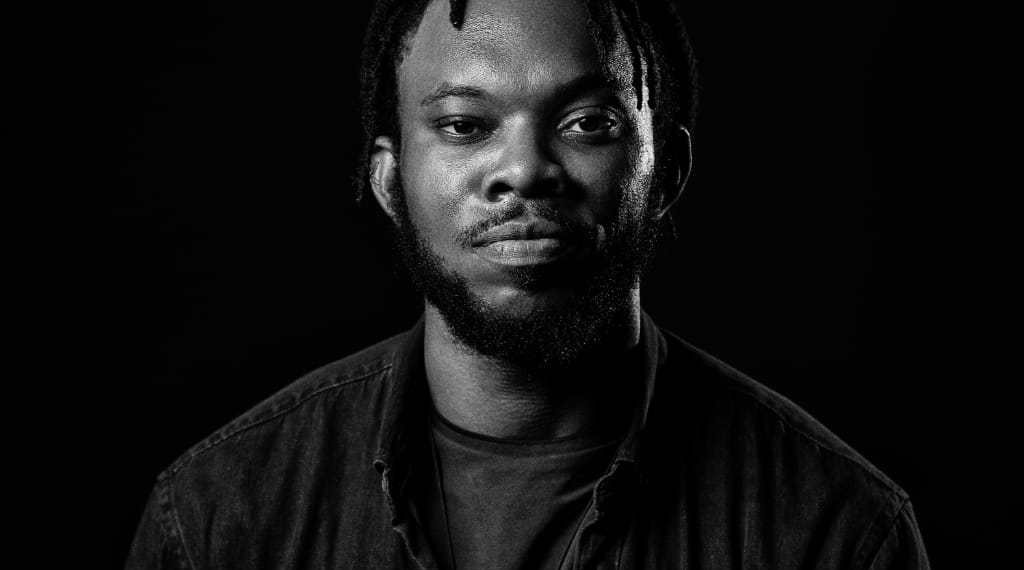
Hymar Idibie David is a Nigerian writer, satirist, and memoirist whose work captures the grit and irony of growing up in Nigeria. He is the author of The Gundown, a gripping crime novel set between Lagos and Port Harcourt, and I For Don Blow But I Too Dey Press Phone
Opuluiche Crew: Let’s begin with you. Could you introduce yourself briefly—who is Hymar Idibie beyond the bio and books?
Opuluiche Crew: You’re the author of I For Don Blow But I Too Dey Press Phone. What inspired the book, and are there other projects you’re currently working on?
Hymar: I have always been telling my stories, especially on social media. So, I just figured I could put it in book form for a wider reach. I just wanted people to understand what it is like to grow up different, especially in a country like Nigeria where your difference, your disability isn’t catered to. Currently I have a lot of projects I’m trying to work on. A collection of short stories, a collection of poetry, another collection of poetry, focusing on mental health and PTSD, a novel.
Opuluiche Crew: You’ve lived in different parts of Nigeria and experienced diverse realities. How have your environment and personal journey influenced your creative voice?
Hymar: It doesn’t matter where I go, Nigeria is Nigeria and Nigeria is set up to exclude people like me from really experiencing what it means to belong, to feel seen and heard. So irrespective of where I find myself, my understanding is I just have to look after myself, make things happen for myself, all the while taking in the little differences, the people, the spirits and aura of the place. For example I feel more at home in Uyo than in Lagos. I feel more at peace. In Lagos there’s this air of urgency, restlessness and brimming violence. In Jos, I have watched two different demographics with a violent past exist in a certain suspicious calm, the tension from unresolved issues still hanging in the air. Yet in spite of all of that, there’s the beauty and the humanity on all sides , there are people living their lives, making the best of their lot, making wherever they find themselves home.
Opuluiche Crew: How do you personally define success—both in life and as an artist? And has your view of success evolved over time?
Hymar: We all have different definitions of success. What I see as success may sound limited or shallow to you. But it is me. It is me. And it is thus valid. You tell your dreams to people and they start preaching. They start making “you are bigger than this” speeches. They start trying to foist their definitions of success on you. For them, success means quantity. Big. More. Big. It is how we have been taught to see success. But for some people. success is not that cliché. Success is not necessarily a place they arrive at. It is not about getting things. For some of us, success means being able to look ourselves in the mirror and ask “Are you happy? Are you okay? Are you living? ” and say YES to all these questions without a moment’s hesitation. For some of us, success is not about being big. It is about being there. Very much there.
Opuluiche Crew: What are your thoughts on social stereotypes and the pressure to conform? Has art been a way for you to resist or reinterpret societal expectations? What does it mean to be authentically yourself in a world that constantly tells you who to be? How has your art helped you navigate that tension?
Hymar: Lol. Na exam abi na interview be this. Anyways, to answer a part of your question from a personal viewpoint, right from when I was a child, I just had the feeling that people expected me to function within certain parameters. That there were things I was naturally excused from doing, from being, from becoming. These were unspoken stereotypes that only came alive when I did or achieved something either in school or even the football pitch, then, all of a sudden someone is trying to put me in my place, to remind me I’m supposed to be less, to downplay what I was doing. And that was when I learnt to push back. To fight to control the narrative of my being, but that one too was weaponized into a “typical of them, they are always fighting with anger issues” stereotype. There’s often the pressure to perform “humility”, “meekness” and “maturity” especially in situations that call for a vocal pushback just so you can escape some tags and ‘I talk am”. But I keep reminding myself I didn’t come this far to start trying to please strangers and people who don’t show me grace or respect. So, irrespective of how it gets interpreted or how I am viewed, I do and say what I have to. So yeah, my art became a way to push back against untrue narratives, exaggerated stereotypes and the collective ignorance of most Nigerians online.
Opuluiche Crew: You’ve spoken on themes of diversity and inclusion—how do these concepts show up in your creative work, and why are they important?
Hymar: I have come to realise that when people talk about diversity and inclusion, they usually have these ready-made boxes where they believe the “others” would fit in. But sometimes, I think people either overthink the idea of inclusivity or just don’t understand how complex it gets. Two hearing-impaired people could be assigned a certain box, a certain place, yet be so different. For example I don’t know sign language because my experience with trying to learn wasn’t a positive one. So imagine I am to go into some spaces and they automatically think, oh, just get him a sign interpreter, and instead of just helping, it ends up just being another layer of confusion for me. So, I like to insert some of these differences, these complexities in my writings to give people an idea of how broad and really diverse the work of diversity should cover
Opuluiche Crew: Many young people feel pressure to perform or prove themselves to society. What has been your experience with this, and what message do you have for them?
Hymar: Haha. I am a young person myself oh. So I would be speaking to myself basically. From my experience, I would say, do you. Just do you. The world may not adjust, but if it gives you a sense of fulfilment, a sense of being, if it makes you feel you are living genuinely and not performing an act to be validated by anyone, you are there. It is sometimes hard to live that way, because, as human beings, we don’t exactly exist in isolation. We all come from one community or the other. We have people who are invested in our lives. People who have been there through the journey. So we want to consider them in what we are doing or trying to be. It is often difficult, but one thing I have learnt is that at the end of the day, whatever happens, whatever you become or not, your life is still your own and nobody will live it for you. So, mainly just do what’s good for you. Just you.
Opuluiche Crew: How do you see social media—as a tool for expression and connection, or a threat to thoughtful art? Or both? In what way can art and literature through social media dismantle social class barriers, create shared spaces, and empower anyone to be anything?
Hymar: I used to have a social media page where I posted stories I wrote, then eventually had to shut it down because people were copying and reposting elsewhere. People were stealing my stuff and some even wanted to make short films off them for free. Social media is good for exposure and growing an audience, it is also good for building your voice, making your imprints on the literary landscape. Social media makes it easier for genuine talent to stand out, but it is also a double edged sword in the sense that it can be a whirlpool of distraction you get sucked into if you aren’t disciplined. Also writers and artists who want to monetize their craft need to go beyond social media or find ways to protect their work
Opuluiche Crew: What are your thoughts on digital humanities—the merging of technology and the arts? Are you hopeful or cautious about its future? AI in art is a growing conversation. Do you see it as a threat to originality, or as a potential partner in the creative process?
Hymar: I am not worried about AI in art, because you just can’t replace that purity of art as it comes from deep within the human heart and mind. A machine can only imitate, true artists create. Some people believe AI can be used in a collaborative sense, but I don’t accept that. The creative process is supposed to be sacred, personal and even lonely; an intimate dance between the artist and the voices in his head. To use AI is to corrupt the process and it no longer becomes art, it becomes a scientific experiment parading as art.
Opuluiche Crew: What does it mean to be truly alive for you? And how does your art help you stay rooted in that feeling?
Hymar: Hmmm, I like to think I know how to live. I don’t take things too seriously. I don’t allow myself get anxious about anything. I dream but I don’t tie my happiness to my dreams or my goals, they are just purpose to work towards, not the sum total of my entire personality. And that helps me live and enjoy both the little and big moments of life.
Opuluiche Crew: Finally, what do you hope your art will say about you—to this generation, and the ones that come after?
Hymar: Don’t know about the next generation and all that futuristic stuff. I’m just about the here and now. Whatever anyone thinks or says when I’m gone wouldn’t matter because I won’t be here to see any of that. But then I hope to give voice to people on the sidelines now. People who feel like there’s no place for them in the world. People who have stories like mine but don’t know how to tell them. I hope to do something for them to make them think, to say, “Okay, someone gets it. Someone really gets it.”
Opuluiche Crew: Alright sir that summarises the interview, it has been enlightening thank you.
Hymar : Thank you and you’re very much welcome.
Conclusion
Hymar Idibie David is a Nigerian writer, satirist, and memoirist whose work captures the grit and irony of growing up in Nigeria. He is the author of The Gundown, a gripping crime novel set between Lagos and Port Harcourt, and I For Don Blow But I Too Dey Press Phone, a memoir that blends humour, angst, and insight into the life of a young Nigerian trying to find his voice in a noisy world.
Hymar began writing at the age of 11 or 12—penning plays, poems, and letters to an imaginary cousin. Since then, he has honed his craft through workshops such as the Etisalat Literary Week Writing Workshop, the Farafina Creative Writing Workshop, and the James Currey Writing and Publishing Workshop. He also facilitated the now-defunct Flash Writing Challenge, an online flash fiction competition that spotlighted emerging voices.
Shuttling between Lagos and Uyo, Hymar continues to use writing and social media to question, document, and provoke. With sharp prose and a storyteller’s instinct, he speaks truth to power—always with a touch of humour, always with heart.