Interviews From our Journals
(Vol 1)
A Midday Conversation with Akachi Adimora-Ezeigbo, an essayist, literary theorist, novelist, playwright, poet, short story writer and children’s author. Adimora-Ezeigbo is a multiple award-winning author of The Last of the Strong Ones, House of Symbols, Children of the Eagle, Trafficked, Roses and Bullets among many others.
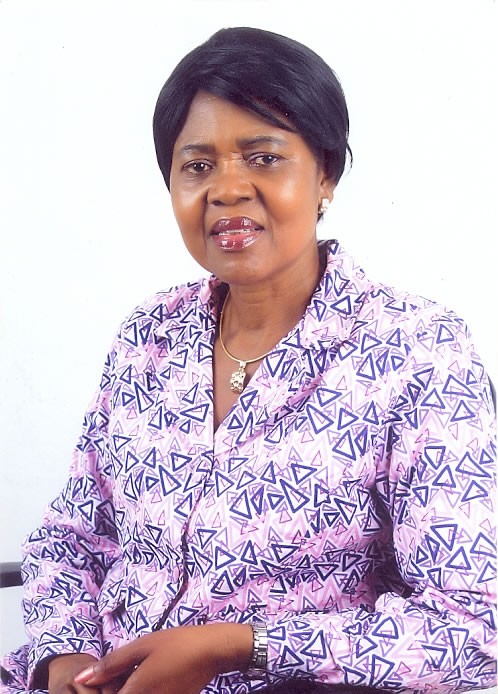
Opuluiche Crew: What inspired you to be a writer, Ma?
Opuluiche Crew: Interesting. How do you find inspiration for your characters, especially the women in your stories?
Opuluiche Crew: What are some of the challenges you faced as an upcoming writer in the early stages of your career?
Opuluiche Crew: Who are some of your literary influences?
Opuluiche Crew: What do you think about writing for fame and money?
Opuluiche Crew: How has literature and writing impacted the way you see life?
Opuluiche Crew: What is your advice for upcoming writers?
Opuluiche Crew: Thank you very much, ma for creating out time to speak to us.
Interviews From our Journals (Vol 1)
A Royal Conversation with HRM, Igwe Chidubem Iweka (Eze Iweka III of Obosi)- A film maker, theatre artist, poet and writer. HRM Igwe Chidubem Iweka is the author The Ancient Curse which was nominated for the Association of Nigerian Authors (ANA) Ken Saro-Wiwa Prize in Prose. His stage play, August Inmates was nominated for NLNG’s The Nigerian Book Prize while his anthology of poetry, Reflections of Hope, is gearing up.

Opuluiche Crew: What inspired you to be a writer? We have seen some of your books and it's surprising that a king is also a writer and a poet
A.C. Iweka: I guess it started quite early. As a little boy, I used to like to tell stories and fairy tales of those days ( akụkọ irò) as a primary school boy and as I grew older, I noticed a lot of people would always advise me to be a policeman or a detective because I was good with facial recognition and I kept wondering if I should actually become a police man but as I grew up I found out that recognizing faces wasn’t the main thing, It was about recognizing faces and also images and that’s imagery, like I go to a place like New York or Kaduna, probably I have been to that place just once and I want to write about that place.
I can recreate it because it’s there in my memory. I think the first time I noticed that I could write was in class 2. I remember writing an essay and the teacher who’s a retired ESUT lecturer now called me and started questioning me on the essay I wrote.
He said he wouldn’t have believed I wrote it if not for the fact that the essay was written in class. He would have thought someone wrote it for me.
I think that gave me my first inspiration that I do have a little knack for writing fiction and from fiction I went over to writing other things. So, basically that’s it.
Opuluiche Crew: From the little time we've spent here, we noticed how busy your schedule is and we're wondering how hectic being a king and also a writer can be. Was there ever a time you felt like quitting writing for your kingly duties?
A.C. Iweka: No, no way.
Opuluiche Crew: Why, if we may ask, Sir?
A.C. Iweka: Well as you can see, today’s Friday and I’m not busy. Of course, because there are days you would come here and find about 200 persons seated both outside and inside waiting for their turn.
Obosi is a vast kingdom and it encompasses some of these places you call Onitsha and people come from different parts of the kingdom with their problems because as vast as the kingdom is, so are the problems. I write in the night mainly.
Opuluiche Crew: That means there's literally no excuse not to write? The reason is because we see students in our contemporary time always complaining about workload from studies. So, do you think that responsibility isn't an excuse to write?
A.C. Iweka: No, there’s no excuse for a writer who has stories in his head. In fact, the stories I have in my head I can’t keep up with the pace of churning them out because you can’t stop writing. It’s like when there’s a tap running and there is a bucket that the water is running into and even when it gets full it overflows unless you bring something and start taking water out, it keeps going and never stops.
That’s why sometimes you see writers in their 80s and 90s and they still write. I may be driving my car and an inspiration comes, I find somewhere and park then put it down. During the day I take care of the kingdom and at night I write.
Opuluiche Crew: Do you feel the experiences you've gathered as a king has motivated your writing.
Opuluiche Crew: Does being a writer help shape the morals you apply as a king?
A.C. Iweka: Yes, definitely. Most writers and poets are people that work on morality. Someone who teaches morals has to show examples because I can’t be a poet who tries to correct with his writing and I turn around and start acting out of line with what I write.
Opuluiche Crew: This journal is for students, and there are some who want to write but don't know how to. I want to know if there is a particular way to write. And what's your advice to upcoming writers?
A.C. Iweka: Writing had different genres, drama, prose and poetry. It all depends on the one you’re working on. If you’re looking at a blanket approach to it all, I’ll just say that you should follow your talent, your inspiration and you work on it.
For instance, if you’re writing a thriller, you need to bear in mind that you need to keep the suspense at every step of the way; you don’t let the cat out of the bag too early in order to keep the reader’s interest.
People actually do hold workshops on writing and sometimes it can be conceived that it kind of puts a constraint on a way a person should write. It’s not bad anyways, it helps to coach persons who want to write and also give pointers on how to write but I think that every writer has uniqueness and that’s what you need to nurture.
You can also have creative friends whom you can give your works to for critical review like I do when you’re done writing. They can give you their own take on what you’ve written before you send it off to the publisher.
Opuluiche Crew: Thank you for your time, Igwe. We hope to be back again, Sir.
HRM Igwe Chidubem Iweka read Theatre Arts at California State University, Hayward and worked for a production company, Creative Associates, as a writer/composer/ instrumentalist/ Artiste and Rapporteur. Iweka taught drama in two performing arts schools. He is an accomplished novelist, playwright and poet.
He was the M/D of Nigerian Mirror Newspapers for many years and contributed numerous articles as well. His book The Ancient Curse was nominated for the Association of Nigerian Authors (ANA) Ken Saro-Wiwa Prize in Prose. His stage play, ‘August Inmates’ won a nomination for NLNG’s The Nigerian Book Prize while his anthology of poetry, Reflections of Hope, is gearing up. His books are used in many universities for literature.
Iweka has written, produced and featured in a number of Nollywood movies. He is also a businessman with special interests in real estate. He is the Eze Iweka III of Obosi Kingdom and remains one of the most prolific, dynamic and passionate youthful kings in the Eastern Nigeria and his giant and innovative strides continue to place and reposition the town of Obosi in the global map.
Interviews From our Journals (Vol 1)
An Evening of Exchange with Sir Odili Ujubuoñu, the author of Pregnancy of the Gods, Treasure in the Winds, Pride of the Spider Clan and Crows of the Yellow Stream. Pregnancy of the Gods won the 2006, ANA/Jacaranda Prize for Prose, Treasure in the Winds won the 2008 ANA/Chevron Prize on Environmental Issues and was nominated for the Nigeria Prize for Literature 2008, while Pride of the Spider Clan was nominated for the 2010 Wole Soyinka Prize for Africa and won the 2010 ANA Prose Prize.

Opuluiche Crew: What inspired you to write?
I am a child of two worlds: the world of imagination and the real world- that is the world I see. When I was eight, I lived in the village and the war just ended. I saw so much at a young age.
I came from a very old family, with so much history in it, and the obi system was still in use then, where people come together to listen to stories. I lived through the war and that was when I began to understand my environment and hear a lot of things. I didn’t entirely feel the trauma of the war, because the war didn’t affect my family. It was at Christ the Kings College, Onitsha, my secondary school that I began to discover my talents. On a faithful day, I was playing with birds when our priest back then, he was also our Principal too, saw me playing with the birds and called me. He asked me what I was doing.
I began telling him stories in order to explain what I was doing. He brought out a cane, gave me a lash and dragged me by the ear to library and pointed at the books, and said to me, “If I have nothing doing I should come here and read the books here, that maybe one day I might tell the world these stories I was telling him.”
So I began to read and read till I finished all the books in the library before I left the school. I was reading for entertainment, I didn’t study literature but I loved reading books. So, when I entered the university, my course, Political Science, demanded I should read, and my roommates then studied English and Literature and this helped me to know a little about literature, because they would come back from school and they would argue about something and I would listen to them and grab some things and from there I knew and was sure where I should go. I knew I could write not literature though but I could write very well, so I started doing articles and newspapers.
When I finished my youth service, I was asked to become a police officer but I refused. I went back to Lagos and fortunately I got a job as an advertiser. Advertising demands so much, I have to think strategically, there should be a purpose for writing each article, so because of that I began to write with my ears, and also my eyes, I began to visualize words more.
In 1993, Abiola’s election was canceled, I was 27 then and a bachelor, I was not doing anything then because everywhere was shut down. I bought an exercise book, 80 leaves, from a Mallam down our street, then I wrote the first sentence and that first sentence is first sentence of my novel, The Pregnancy of the Gods. When I wrote the first sentence, everything else came easily, like I had everything inside of me, and I was just vomiting them. I couldn’t stop.
When I came back from work, since I was a bachelor, I would lie flat on my stomach and begin to write until I finish one exercise book and close it and keep it and begin to write in another one, I wrote and wrote till my pen finished, that was when I realized that the ink of a pen can really finish.
I am a conscript of the muse, a conscript is simply a person or someone forcefully taken to fight in a war, and the muse conscripted me to come tell the story to the world.
Opuluiche Crew: That is quite an interesting beginning and encounter. What can you say about people that have desire to write but can’t write? I am sure that everybody is not as imaginative as you are and everybody did not come from an environment as yours.
Odili: Firstly, writing is a labor of love and not for gain. I didn’t write to gain fame, to earn wealth, I was never motivated by those. I am not saying one cannot write to gain fame but that was never the reason I wanted to write and money and fame can motivated someone to write too. I see my writing as a duty that if I carried it I will be rewarded maybe not as a writer but maybe with some other things. I have always had advertising to pay my bills. I write because I enjoyed writing, it makes me happy. I composed the Anambra State anthem for the State, and when you were kids I’m sure you heard the song “I love my chickki noodles”, so that’s the work of a copy writer. So, I use these things to pay my bills. Because I am the conscript of the muse, is what the muse wants to do that I will do and if I have to live all over again I will still want to be writer because it is what gives me the greatest joy and happiness in life and I always have something to write at a particular time and I am currently writing something now.
Opuluiche Crew: Has being a writer changed how you see the world?
Odili: Yes, it gives you or will I say you are much more empathetic, you are concerned about the feelings of other people and you look at things from a fourth dimensional way, remember your character is your creation, a character is not a single dimensional thing, it is three dimensional and then that fourth dimensional is what the write enjoys, what the writer sees that the character does not see or even know of, which is the character that will die, the character that will live, the character that will fail or succeed. It kind of gives you a god gene; we tap into a god gene by being creative, that is to make things there are not there to be, to create things into existence. It is a power that literature gives you. It is a power you shouldn’t abuse that’s why you have to be empathetic- one to your character and to society because there should be a moral message in whatever you write, so it is not because you have a pen and that a pen is mightier than the sword, then you turn yourself into a god and use it to finish the whole world, whereas you should use it to change the world to a better place.
Opuluiche Crew: Do you think writing a novel differs from writing an advertisement?
Odili: Yes, definitely, but they complement each other. One is that because you need a lot of time to work on a book it trains and gives you the discipline to write for a very long time, and because you write sensual writing, like writing with your senses in advertising it helps you make your readers enjoy your work more. I remember a critic after reading Treasure in the Wind, he said it was cinematographic in the sense that it was like a movie, like he was reading it and he was seeing a movie. it’s being able to create images in people’s mind, the images you create is what writing adverting helps us to do while writing creatively.
Opuluiche Crew: If you had the opportunity to write for the sake of fame would you accept it?
Opuluiche Crew: Do you think a book needs to go global or person needs to be famous for his book to be worth something?
Odili: The greatest validation one gets or should I say I get from my books is when young people who have read my work tell me about my work, what they learnt from my work, and what empathy the had from it, the lesson they learnt. I didn’t chose writing, writing chose me and since writing chose me I try to live and obey the principles of what I am working on. Sometimes I am a human being. I feel like if I were popular universal writer and things like that, but people are craved out for different purpose. There are two things people work in life for you either work for profits or you work for purpose, mine is purpose, the purpose is whatever I have written will be able to connect the future with the past, that someone can read the novel and have experience a life. When a writer gets that satisfaction I will be like “wow”. So it is how happy are you about this. I am very very happy. I am extremely happy, maybe I started writing late in my life because I had to find a way to pay my bills so that if I am dependent on writing or not, it won’t matter. Probably if I wasn’t an advert man, I would probably be a teacher in the university writing my books and still be teaching which are what most my colleagues are doing in the overseas abroad but it is just what you choose. For me, the happiest moment of my life is when I see the end. You know when you write, “THE END”, when you are done writing, it gives me joy, that is the sweetest moment.
Opuluiche Crew: Do you have any particular time you write?
Opuluiche Crew: Thank you very much for your time and warm reception, sir.
Odili Ujubuoñu’s debut novel, Pregnancy of the Gods, was an instant success. Since then he has published follow-ups Treasure in the Winds and Pride of the Spider Clan. The three books are woven around a magical musical instrument – sacred flute lost and sought after in communities around the lower Niger. Pregnancy of the Gods won the 2006, ANA/Jacaranda Prize for Prose, Treasure in the Winds won the 2008 ANA/Chevron Prize on Environmental Issues and was nominated for the Nigeria Prize for Literature 2008, while Pride of the Spider Clan was nominated for the 2010 Wole Soyinka Prize for Africa and won the 2010 ANA Prose Prize. Ujubuoñu has practised Advertising since 1991. He lives in Lagos and Awka, Nigeria.
Interviews From our Journals (Vol 1)
Interview with Mr. James Eze, the author of the award-winning poetry collection, Dispossessed. Dispossessed won the ANA Prize for Poetry in 2020 and was long listed for the Nigerian Prize for Literature in 2022.

Opuluiche Crew: What inspired your writing?
James Eze: I was inspired in many ways. As a child, I was delighted whenever my immediate elder sister would bring home books for me to read, books like Chike and the River, etc. I was fascinated to read the works of Chinua Achebe, Cyril Ekwensi, etc. When I was in JSS 3, I decided to go beyond reading, thus writing my own work titled, The Village Calamity. The works of Okigbo Christopher sparked my interest in poetry. When I was working as a journalist, I met a friend, AJ Dagatola, who triggered or perhaps made me read and write more. I was able to write the poem, “Lagos Morning” due to the experiences I had in Lagos. I was able to visualize the daily lives and routine of a Lagosian, T.S. Eliot also inspired one of my writings.
Opuluiche Crew: What are the themes majorly explored in your poems?
James Eze: My themes are diverse. I grew up with stories told by my parents about Biafra and with those stories; I was able to write the poem “Dispossessed.” There is also the theme of superimposition where countries like America, China, want to take charge of some countries that are underdeveloped. There is the theme of atonement. Here, the poet persona is grown, thereby asking questions about war, the instability of the country. The poet persona asked the question, “Why are we so blessed yet so wretched?” My second collection of poems titled, Goosebumps it essentially about love. I am also a songwriter. I wrote “Survival” when I was disenchanted about Nigeria. I wrote newspapers, articles, journals about Nigeria so that my voice could be heard. I also wrote the song titled, “Shege.”
Opuluiche Crew: How do you handle criticism as a writer?
James Eze: Criticism is very important in the growth of a writer. I take criticism in good faith because criticism helps me to do and write better. I have people around me who assist me to criticize my works. One in particular is Professor Oluogwibe. He is fierce and very blunt when criticizing a work.
Opuluiche Crew: What advice would you give upcoming writers?
James Eze: I would advise them to read very serious works of some prominent writers. If you want to write anything about love poems, search or goggle about Pablo Neruda. He wrote about love in a way that is unforgettable. I advise the young generation to read, they should not relent.
Opuluiche Crew: Any upcoming project and what should we expect from it?
James Eze: I am currently working on my second album, “We Shall Never Forget,” and it will soon be ready. My next collection of poems will be released after releasing my second album.
Opuluiche Crew: Thank you very much, sir for your time.
James Eze began his career as a journalist with Thisday Newspaper in Lagos. There he established himself as a man of superb letters before joining The Sun Publishing as the Literary Editor of Sunday Sun. In this position, he met and interviewed the star novelist, Chimamanda Ngozi Adichie. The meeting marked the beginning of a friendship that would lead to the formation of the highly successful Fidelity Bank International Creative Writing Workshop series, taught by Chimamanda Ngozi Adichie but co-ordinated by Eze who had moved to the banking sector to become the head of external communications at Fidelity Bank.
Eze came to poetry through Gabriel Okara‘s poems and had since established himself as a poet to reckon with. His debut collection, dispossessed, won the ANA Poetry Prize in 2020 and was longlisted for the Nigerian Prize for Literature in 2022. Beyond being a poet, Eze is a literary evangelist and a curator of many poetry and literary events. He also founded the Udala Nation Crew whose debut EP, Daybreak, blurs the line between poetry and song.
(This bio-data is culled from WRITING AS THE CREATION OF CULTURE A DIALOGUE WITH JAMES EZE by Ugochukwu Anadi. https://africaindialogue.com/2023/06/07/writing-as-the-creation-of-culture-a-dialogue-with-james-eze/)
Interviews From our Journals (Vol 1)
A Lunch Break and Moment with Ikechukwu Asika- an award winning playwright, novelist, poet, a teacher and a critic. Asika is the author of the winning novel, Tamara, Love of an Angel, Erimma and recently, Omalinze which won the ANA Prize for Drama in 2022.

Opuluiche Crew: First, I want to say thank you, sir, for accepting our offer to interview you.
Opuluiche Crew: I can’t move forward with this interview without getting this question out of my mind, what inspired you to be a writer?
Asika: I have always loved writing, creativity, and imagination. I grew up reading works and writers like Achebe’s Chike and the River, Ola Rotimi’s The Gods are not to be Blame, The Concubine by Elechi Amadi, and many other works that at the moment I was not supposed to be reading because I was still in primary cum secondary school. I loved the creative words of this writers and how they made me feel after reading them, and the stories they told. I have always been fascinated with storytelling. I think it’s the love for it that pushed me into writing. Importantly, I came from a lineage of storytellers. My mother is a storyteller and the singer too. Her mother told stories too and danced so beautifully that she earned the name, Ngalakwesili. I think it’s something I inherited from my maternal home. I didn’t inherit the dance part though. (Laughs). My father too is a good orator and a traditionalist. So, I think all of these combined genetically to build my muse, the very reservoir and fountain I draw many of my stories. So, I think the art of storytelling- creating and imagining works and making people read your work are all part of what inspired me to be a writer- that fascination to keep a date with the muse. So, I think it’s the love for creativity and growing up that made me fancy the idea of being a writer, the idea of being immortalized through literature. So, that’s it, my initial motivation was love for storytelling, imagination and creativity. Even as a child I have always loved telling stories and also I enjoyed being told stories in return. Finally, I also wanted to be like some of the writers I’ve read, so that is it and here I am, the journey of my career as a writer that is still unfolding.
Opuluiche Crew: Interesting, I must confess. As a writer, where do you find inspiration for the characters you develop?
Asika: The world is full of stories, and characters. Every day you live you come across individuals who ordinarily do not act the way you act, who ordinarily do not believe in things you believe in. So, there are shades of characters as there are different shades of individuals. So coming across characters, and reading about characters, listening to people talk, these are things that inspired me to create my characters and model them after some of these personalities I have come across. For example, I have encountered soft-easy going people, emotional people, petty people, determined people, easily broken people, in fact, all kinds of individuals that can fit in a particular story I want to tell. Just like I said, the world is full of stories and characters so at any point in time, I try to explore different shades of characters. But it is important to note that all the characters in my works are not necessarily characters that I’ve met, they are also characters that I have imagined that are possible to be part of our world from stories I have read and tales I have listened to. So, I create my characters from all of these shades. In fact, it’s more or less 60% of people I’ve never met and 40% of people that I’ve met. Just like in Tamara, I’ve never had any encounter with someone who had be trafficked; nobody who had gone through that process had been my friend. I’ve never had a prostitute who was a close friend of mine. So, in other words, I created Tamara from stories I have heard, issues I have read, and from what I imagined is possible. I grew up listening to stories of trafficking and prostitution in Italy and other parts of Europe and across the globe. In other words, I imagined Tamara. I gave life to her. I have never met her and I have never had a close friend that had experienced something like that. Characters come to me from experiences; people that I believe exist: from travels, from listening to stories. I hardly create characters based on people I know because I think I know them to well except on one or two scenarios. In my Love of an Angel, some characters were inspired by people that I knew while growing up. I wanted to write on child abuse which I had seen while growing up. Also in my work My Hero, Chikamso wasn’t real, though Chikamso was more or less me because I heaped on that character some of the fears I had while growing up and still in the university. For example, when I was in the university, I was faced with a lot of existential questions like: where was life taking me to after graduation? What was going to be my fate with the rising curve of unemployment and so on? I have terrifying heard stories of people graduating without finding jobs for ten to fifteen years. So, that fear I had, after giving it my all my best in the university only to end up unemployed, was heaped on Chikamso. At the end of the day Chikamso got a job and it cost him. The story is a tragic story because at the end of the day Chikamso died. I think it was my own way of sounding a note of warning to society that if it does not treat me right, I would give up like Chikamso (Laughs). So, when I talk about the biographical approach of literature, I feel the closest I have come to creating myself was in my first novel, My Hero, but as God would have it, my fears did not come to pass as I am gainfully employed and I am doing well by the grace of God. In fact, I secured employment just three months after my youth service. In other words, my characters are imagined and real. Tamara was imagined but Olachi was almost real in Love of an Angel. Olachi was real though coated with exaggerated fictional elements and then in My Hero, Chikamso was imagined but it had a little bit of myself. So, in my fictional works, I create characters that I imagined and that are real. I create them all.
Opuluiche Crew: In most of your works, the lead characters are females for example, Omalinze in Omalinze, Tamara in Tamara, Olachi in Love of an angel, etc. How is it that you as a male writer can relate to female characters so well?
Asika: I have always said that one of the thing art does for a human being is the status of a god. Art confers on human beings the status of a god. That is one of the things I enjoy about creativity, it gives me the power to create, to do and undo. That said, regarding the question you asked me on how it is that I relate to girls or women in my works despite being a man, I think the answer is simple. It has to do with my family and growing up. I think my survival in a nuclear family of five girls helped in shaping my understanding of women and girls. I grew up to understand the way girls think, the way they do things. I grew up in the midst of my five sisters in a family of seven children- five daughters and two sons. So, I think I grew up understanding the psychology of women more than I ever did with men before now. I feel it was even easier for me to create a girl like in Tamara and some other ones in my works. I think it was from studying and knowing my sisters, their temperaments, their joys and all that they did which unconsciously shaped my understanding of female psyche. I started understanding the psychology of men when I lived in a boarding school full of boys at St Mary’s High School, Ifitedunu, during my secondary school days. So, it was my sisters that gave me insights on how women work. So they made it easier for me.
Opuluiche Crew: Wow, wonderful. Well, as a writer, do you think that being a writer have helped you to relate to people's problems?
Asika: Vey well, and in several ways too. It has helped me to be able to relating to people’s pain and feelings. Writing has always helped me relate with people’s travails, joy and complexities. It has shaped my humanity because sometimes I imagine things I’ve read. I try to practice what I preach to people. Some of the things I’ve written about in my works I have been able to relate to them. So, I think writing has helped me feel people’s suffering, appreciate differences, appreciate complexities, appreciate the fact that people would never act the same. Writing has made me to understand that what people need sometimes is love and affection and other times, just avoid them and let them be. Other times encourage them and motivated them. Just a lot people need at different times and I keep doing my best to understand and offer what is needed at any point in time and I owe it to my writing and deep rooted insights in people’s complex nature and experiences.
Opuluiche Crew: How do you think literature has helped you to see yourself in other people?
Asika: Literature has happened me to understand people, to manage people’s pain and most importantly, literature has helped me in understanding that everyone must not act the way I want them to act. That’s why I love the saying that “a writer who goes to a psychiatrist is paying for what he should be paid for.” So, writing literature made me a psychologist, writing literature taught me to understand people’s mindset and complexities like I said earlier so that I can recreate these characteristics in my fiction and in doing so, understand them in real life.
Opuluiche Crew: Do you think that your perspective about life and as a writer has made you detach from people so much?
Asika: Well, yes, it has its undeniable influences. Knowing so much of people and then real life experiences, can influence even the way you judge people you are yet to meet and interact with. My work as a writer goes between fiction and reality. So, there are people I’ve come across and had interest in but I detached myself from them just to be able to study them. I tend to be selective when it comes to people and friendship. I think I spend the moments I should be enjoying people to read them and try to understand them. So, yes, my perspective of life has made me detached from a lot of people.
Opuluiche Crew: Do you think your desire to immortalize yourself have pushed you to create expectations for yourself that you could not reach? Does it affect you in anyway? I mean as a writer, does that desires to be known affect you in anyway?
Asika: I’m not sure wanting to be known has affected me as a person. Just that sometimes it put a lot of pressure on me which has pushed me outside my comfort zone when it comes to the desire to write better and more creatively too.
Opuluiche Crew: Why do you have that ambition to be known all over the world?
Asika: What are we here to do in this world? I think it is because there’s nothing else we have in this world other than living this life, touch lives and leaving our legacies behind. That’s why we marry and give birth to children. There is this saying that goes “men are hunted by the vastness of eternity…” so, for my ambition, it is all about being the better in my field. So, as a writer, there are levels I want to get to. I see it as a challenge which I must face. This ambition helps me move out of my comfort zone to explore new things creatively. But sometimes it can be depressing because you see new works every day that you feel are better than yours. On the other side, you see people/fans who are inspired so much by your works and they believe in you. These are people rooting for you and cheering you on as their idol. So, you have to turn that depression to motivation to create better works of art.
Opuluiche Crew: As a writer and as the current HOD of the English Department of Chukwuemeka Odumegwu Ojukwu University, how do you make out time to write? When you do write? Do you go through a particular process because most students always complain that they don’t know where to start from, that they are stuck somewhere. So as a writer what is your advice to upcoming writers?
Asika: Being the HOD of English has been tough for me. It has been stressful I must confess, and to be frank I’ve not written anything since acquiring that status. The job has never allowed me or given me breathing space because I want to make a mark in the department. I want to open the eyes of our students to the potentials they have as English students and also I want to create a department that everyone loves. I am involved in many innovative programmes and I think it is the reason I am stressed. But I have welcomed it with joy. Once I’ve achieved those laudable projects in the pipeline, I would take a break and I would pick up my pen again.
Opuluiche Crew: As a writer and as the current HOD of the English Department of Chukwuemeka Odumegwu Ojukwu University, how do you make out time to write? When you do write? Do you go through a particular process because most students always complain that they don’t know where to start from, that they are stuck somewhere. So as a writer what is your advice to upcoming writers?
Asika: Being the HOD of English has been tough for me. It has been stressful I must confess, and to be frank I’ve not written anything since acquiring that status. The job has never allowed me or given me breathing space because I want to make a mark in the department. I want to open the eyes of our students to the potentials they have as English students and also I want to create a department that everyone loves. I am involved in many innovative programmes and I think it is the reason I am stressed. But I have welcomed it with joy. Once I’ve achieved those laudable projects in the pipeline, I would take a break and I would pick up my pen again.
Opuluiche Crew: When you do write? Do you go through a particular process because most students complain that they don’t know where to start from, they are stuck somewhere so what’s your advice?
Asika: The process I take for writing is first to plot my story or sketch the story out then I try to imagine it chapter by chapter even though everything sometimes goes beyond what I expected initially but the sketch is important always to lead the way and inspire the entire process. For drama, I try to plot it scene by scene, for novels I try to picture how many chapters it would be and so on. So, basically you have to plot first then sketch after that you try to picture your chapters, and you begin to write and the muse takes it up from there. However way it turns out, embrace it as exactly what the muse desires and that you are only a vessel. Importantly, when you are done writing, don’t rush to press to publish. Give your story time. Let it ferment. Writing demands time, patience and motivation to be able to work out. Give your writing time to mature.
Opuluiche Crew: So as a writer what is your advice for upcoming writers?
Asika: I have said it already but in addition, my advice for young writers is that writing is beyond making money but rather fulfilling a calling and leaving a legacy. We can look at Achebe, Wole Soyinka and so on. So every young writer out there should try and forget about money when writing but rather chase a legacy or try to change the world with your writing and I believe that every writer should have what I call writer’s heart to endure through the torturing process, because writing process can be daunting and challenging but know that the end would always be justify the means. The end is always salutary and celebratory.
Opuluiche Crew: Thank you very much for your time, sir.
The winner of the ANA Prize for Drama 2022, Ikechukwu Asika is a novelist, poet, playwright, and critic. He has published in almost all the genres of literature. Asika is dedicated to the business of knowledge production and creative writing and has distinguished himself as a prolific and burgeoning Nigerian creative writer with award-winning works in all genres. He has published over twelve novels, ten plays, and five anthologies of both poetry and short stories. My Hero (2008), Love of an Angel (2009), Follow the River (2010), Tamara (2013), Under the Mango Tree (2019), Pimples on Wrinkles (2018), Dance of Shame (2020) The Last of the Brave Souls (2020), Heart of Gold (2021), A Drop of Kindness (2021), and Journey in the Jungle (2022) are among his prose works. Blind Decision (2006), Burying whom we Killed (2007), Erimma (2014), Cord of Life (2016), When Gold Rusts (2015), Tears of the Rising Sun (2016), Our Daughters Have Gone Mad Again (2021), Beyond the Darkling Clouds (2020), Tears on the Mountain (2021) Pain in the Bone (2022) Omalinze (2023) make the list of his dramatic outputs. Omeile Vol I & II (2011), Operation Python Dance (2018), and Who Poetry Epp (2018) are among his poetic outpourings. His short story collections include but are not exhaustive of The Portrait of an Artist as a Mad Man (2015), and Vacancy for the Post of a Bride (2016). His novel, Tamara, won the Youth Achievers Award for Prose (Senior Category) in 2013 and was 2nd Runner-Up for the ANA Prose Prize for Fiction in 2013. The play, Erimma, made the shortlist for the ANA Esiaba Irobi Prize for Playwriting in 2014. His recent play, Omalinze, an adaptation of Sophocles’ Antigone, is the Winner of the ANA Drama Prize 2022. The play is a prodigious and ground-breaking dramatic output that reinforces adaptation issues with greater charms possessed and admired in the adaptive dramaturgy of Ola Rotimi, Femi Osofisan, J.P. Clark, and Zulu Sofola. Pain in the Bone (drama) won the Akachi Adimora-Ezeigbo Prize for Drama, in 2023. Some of his short stories have appeared in Heart Links, ANA Review, African Writers.com, and Voices from the Veil: Anthology of Short Stories from Africa and the Diaspora. His first solo play, Colours of Madness, is featured in the recently released book entitled: The Power of One: An Anthology of Nigerian Solo Plays edited by Greg Mbajiorgu and published by Kraftgriots.